Lake Stevens Waterfront Home Buying in 2026: Key Delays
August 20, 2026
August 20, 2026
Lake Stevens homes typically went under contract in 17 days in February 2025. This February, the citywide median wait stretched to 63 days, while the median sale price barely moved, up 0.4% year over year to $683,000. If buyer demand had cooled, price would show it. It hasn't moved much at all. Something is adding weeks to the closing calendar, and for the parcels that touch the water, that something isn't hesitation at the offer table. It's paperwork that has nothing to do with what a buyer is willing to pay.
That gap between a flat price and a longer timeline is the story worth understanding if you're closing on lake frontage here in the next year, whether you're the one selling or the one writing the offer.
A market with fewer competing offers and a stable median price usually points to buyers who are still motivated but no longer rushed. That part tracks with the rest of Snohomish County this year, where more sellers listed homes this spring than in recent memory, giving buyers room to actually think before signing.
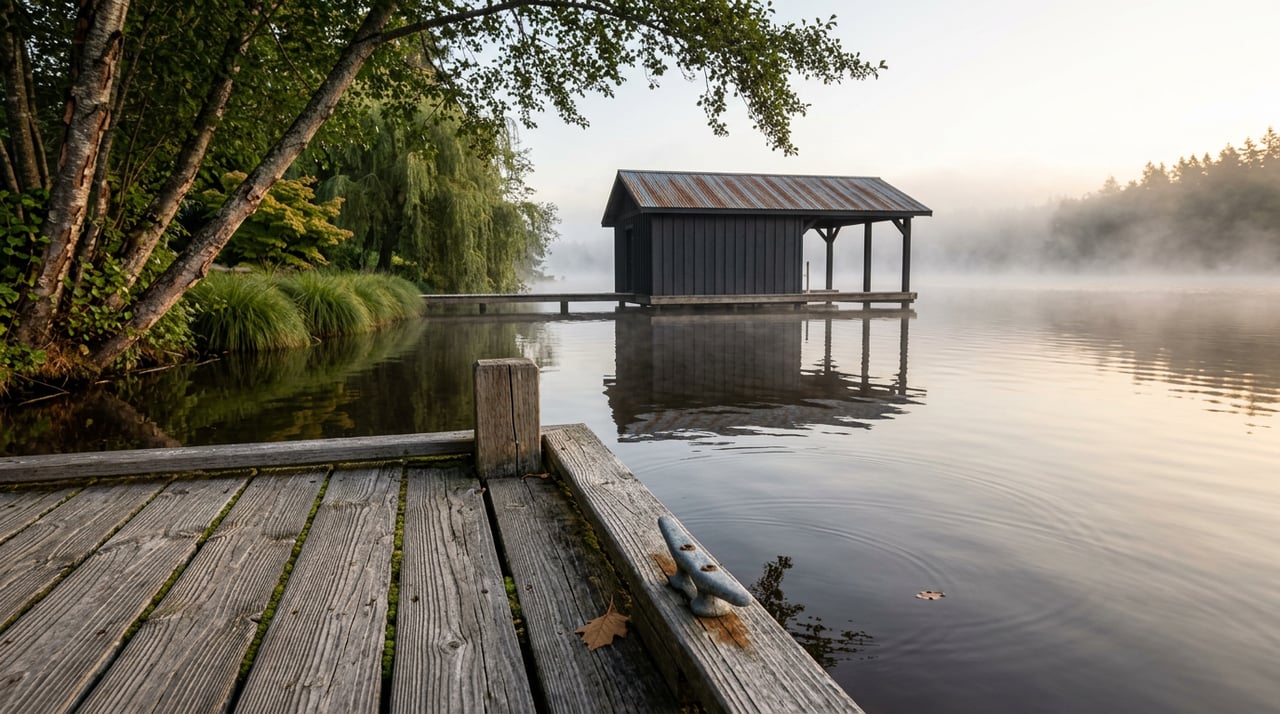
That citywide slowdown is one layer. But a lake with a fixed, shrinking amount of true frontage should, if anything, move faster than the rest of the market, not slower. Lake Stevens is the largest natural lake in Snohomish County, covering more than 1,000 acres, and shoreline lots don't get created. Scarcity like that usually compresses timelines. When a scarce asset class sits on the market as long as an ordinary one, or longer, the explanation is rarely buyer psychology. It's process. And waterfront property here carries process that a typical inland listing never touches.
Most buyers moving from an inland listing to a lakefront one assume that whatever work the home needs later, a new dock, a repaired bulkhead, replaced decking, works the same way any other home improvement does: pull a permit if it's big, skip it if it's small. Lake Stevens shoreline property doesn't follow that logic.
The city's Shoreline Master Program governs any parcel within 200 feet of the lake's ordinary high-water mark, along with frontage on Stitch Lake and parts of Little Pilchuck and Catherine Creek. Under the city's own code, a project that qualifies as exempt from a full shoreline permit is still not free of oversight. It remains subject to every other applicable provision in the program and to state and federal rules layered on top of it. In practice, that means a homeowner who wants to replace worn decking may not need a building permit, but the city still requires a land-use permit for that same project, according to city permitting guidance. The exemption removes one form. It doesn't remove the review.
Dock placement carries its own specifics. New piers generally need to sit at least 10 feet from side property lines, with a narrow 5-foot exception when the standard setback isn't feasible on a tighter lot, and the code allows one pier or dock per single-family residence. A buyer who plans to replace a dock the week after closing should confirm the lot's width and setback math before writing an offer, not after.
None of this shows up in a comparative market analysis. It shows up in escrow, when a buyer's contractor calls the city and finds out the timeline just grew.
Layered on top of local shoreline review is a statewide clock that starts ticking February 1, 2027. Starting that date, Washington requires a property-transfer inspection for on-site sewage systems, meaning any septic-served home changing hands after that point needs documented inspection as part of the sale.
For a Lake Stevens waterfront home on septic today, that deadline is close enough to matter right now. A seller listing in the next twelve to eighteen months should assume a buyer's agent will ask for pumping records and system condition well before the state requires it, because informed buyers are already asking. A buyer under contract on a septic waterfront property in early 2027 should expect the inspection to be a checklist item rather than a negotiating chip, since it becomes standard procedure rather than an optional ask.
The most locally specific friction in a Lake Stevens waterfront deal has nothing to do with the shoreline at all. It's the sewer bill, and the reason it's rising has been playing out in Snohomish County Superior Court for years.
The city and the Lake Stevens Sewer District operate as two separate entities under a 2005 agreement that set 2033 as the earliest date the city could absorb the district. In 2020, the city council tried to move that date up, citing a state law that allows early assumption once 60% of a district falls within city limits. The sewer district sued in 2021. In June 2025, a Snohomish County judge ruled the city has to honor the original 2033 date. The city appealed on July 15, 2025, sending the case to the state Court of Appeals.
"We have a contract, and contracts mean something."
That's sewer district commissioner Kevin Kosche, responding to the June 2025 ruling. The dispute isn't abstract for ratepayers. Sewer district commission president Andrea Wright has said the fight has already cost both sides over $1 million in combined legal fees, and the city itself expects its appeal to run another six to nine months and cost roughly $50,000, while the district projects more than a year and hundreds of thousands more in added costs.
That legal bill sits on top of infrastructure that needs work regardless of who runs it. Some sewer pipes and lift stations in the district are more than 50 years old, and the district has planned $15 million for upgrades to the Sunnyside Wastewater Treatment Plant, $7.5 million for pipe replacement and repairs, and $29.5 million to rehabilitate lift stations. To help fund that, the city's utility tax on sewer bills rose from 3% in 2025 to 6% in 2026. When the tax was first proposed, Wright pushed back publicly, telling the council, "I strongly recommend reconsidering the ongoing and unnecessary lawsuit with the sewer district."
Whether the city eventually absorbs the district or the 2033 date holds, the rate trajectory for anyone owning waterfront property here points in one direction, and it's being set in a courtroom rather than a rate study alone.
| Date | What happens | Why it matters to your transaction |
|---|---|---|
| 2005 | City and sewer district set 2033 as the earliest assumption date | The legal baseline for every dispute since |
| June 2025 | Judge rules city must wait until 2033 | Confirms the two-entity utility structure holds for years, not months |
| July 15, 2025 | City appeals the ruling | Adds an open legal variable to long-term utility planning |
| 2026 | City's utility tax on sewer bills rises from 3% to 6% | Raises your baseline carrying cost independent of any future rate hike from the district itself |
| February 1, 2027 | Statewide septic transfer-inspection requirement takes effect | Standard due diligence for any septic waterfront sale after this date |
The slower market gives both sides room they didn't have in 2021 or 2022, when waterfront listings moved too fast for anyone to ask hard questions. That room is worth using. Buyers can now reasonably request permit history on any dock or bulkhead work, ask for septic records ahead of the 2027 mandate, and build inspection contingencies into an offer without losing the house to a faster bid. Sellers who get ahead of those questions, by pulling permit records and septic documentation before listing, are the ones who convert the current pace into a shorter close rather than a longer one.
The part that doesn't change with the market's temperature is the structure underneath it. The shoreline review process, the 2027 inspection deadline, and the sewer district's legal and rate trajectory will still be there whether Lake Stevens waterfront returns to 17-day contracts or settles into a slower pace for good. Timing an offer around the calendar is reasonable. Timing your due diligence around it isn't.
Does the sewer district dispute affect every Lake Stevens home, or just waterfront property? It affects any property served by the Lake Stevens Sewer District, which covers most of the incorporated city. Waterfront owners feel it the same way inland owners do through the utility bill, but they layer it on top of shoreline permitting costs that inland buyers don't face.
If I'm buying a septic waterfront home today, do I need an inspection before the 2027 deadline? The state requirement doesn't apply until February 1, 2027, but asking for pumping records and system condition now is standard practice for any waterfront purchase, deadline or not.
Can I still replace a dock or decking without any city involvement? Some projects qualify for exemption from a full shoreline permit, but exempt work still requires city review and often a separate land-use permit. Confirm the approval path before you count on a fast turnaround.
Lake Stevens waterfront still holds its scarcity value. It just comes with more paperwork than the price tag suggests, and that paperwork is easier to manage before you're under contract than after. If you're weighing a purchase or a sale on the lake this year, CJ Singh can walk through the permit and utility specifics for a given property and help you get a valuation or access to private listings before you write an offer.
Stay up to date on the latest real estate trends.

Get assistance in determining current property value, crafting a competitive offer, writing and negotiating a contract, and much more. Contact CJ today to discuss all your real estate needs!