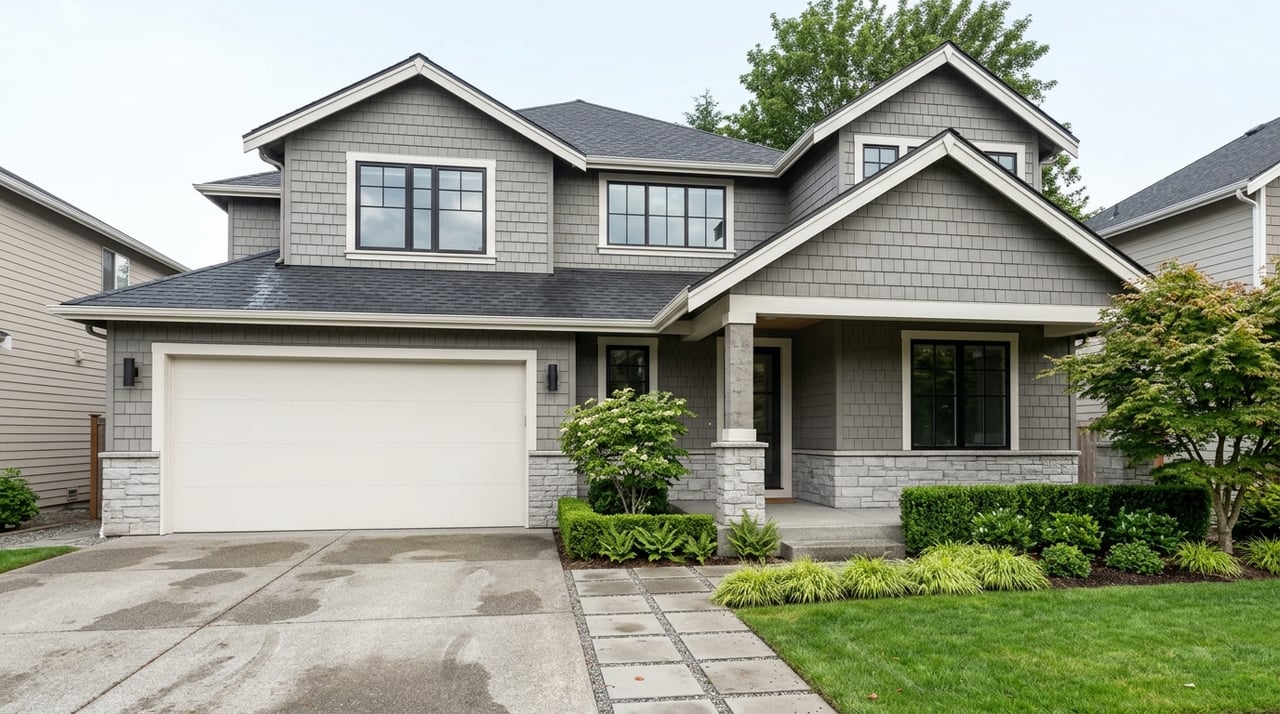
Everett WA Commute Housing for Seattle and Eastside Buyers
July 16, 2026
July 16, 2026
If you work in Seattle or on the Eastside, Everett can look like a smart way to buy more home without staying locked into Seattle or Bellevue pricing. The catch is simple: your commute plan matters just as much as the house itself. If you are weighing value, space, and daily travel time, this guide will help you compare Everett neighborhoods, transit options, and commute trade-offs with a clear strategy. Let’s dive in.
Everett sits in a much lower price band than both Seattle and Bellevue. Redfin’s May 2026 median shows Everett at $579,653, compared with $879,474 in Seattle and $1,499,103 in Bellevue. Homes in Everett also typically sell in about 7 days, which tells you this is still a competitive market.
For many buyers, that price gap creates real opportunity. You may be able to get more square footage, a different housing type, or a better fit for your monthly budget. The key is knowing how much commute convenience you are willing to trade for that value.
The biggest mistake commuter buyers make is treating Everett like one single commute story. It is not. Your best neighborhood choice depends on whether you go to Seattle, Bellevue, or another Eastside location, and whether you drive, ride transit, or use a mix of both.
WSDOT identifies I-5 as the region’s main north-south corridor through Seattle to Everett. For Eastside trips, I-405 is the major parallel route between Tukwila and Lynnwood, with transit buses, HOV lanes, and express toll lanes between Bellevue and Lynnwood. That means your home search should be tied to the route you expect to use most often.
If you commute to Seattle, Everett gives you more than one practical option. The Sounder N Line connects Everett and Seattle and runs mainly during peak weekday commute hours. Everett Station is the key hub, and Community Transit notes that several routes stop there so riders can connect to Sounder, highway buses, or Amtrak trains.
This setup can work especially well if your office schedule lines up with peak travel times. If you have a hybrid job or flexible hours, you may want to compare rail convenience with how easily you can reach I-5 by car. In many cases, the right answer is not just the shortest distance, but the most reliable daily routine.
For Bellevue commuters, direct transit matters more than many buyers realize. Community Transit Route 532 links Everett Station and Bellevue, making it one of the clearest transit options for Eastside workers. Route 535 between Lynnwood City Center Station and Bellevue can also matter if you are open to driving or parking farther south before getting on transit.
There is also a transfer-based option for some riders. Community Transit says Swift Blue connects Everett to Shoreline North/185th Station, where Link light rail is available. That may appeal to buyers who want flexibility, but it is usually a more layered commute plan than a direct bus or freeway route.
If you expect to drive to the Eastside, lane access can make a real difference in your daily life. WSDOT’s I-405 data shows that in 2023, the evening Bellevue-to-Everett drive averaged 42 minutes in general-purpose lanes versus 29 minutes in HOV lanes. That is a meaningful swing.
For buyers, this turns carpool access, parking strategy, and office schedule flexibility into home search factors. A house that looks great on paper may feel very different if your daily route depends on congested lanes at the wrong time. Commute planning should be part of your buying strategy from day one.
Everett is not one uniform housing market. The city’s comprehensive plan describes older central areas as denser, with connected streets, short blocks, and a more walkable layout. Later suburban areas tend to have curving streets, garages, and cul-de-sacs, which often means a different trade-off between housing style and transportation access.
That is why your neighborhood choice should reflect how you want to live, not just what you want to spend. Some buyers want easier station access and a more connected street grid. Others are more focused on parking, highway convenience, or a more suburban housing pattern.
Port Gardner is one of the strongest fits for buyers who want a transit-first or downtown-oriented setup. The area includes historic homes, newer single-family homes, apartments, condominiums, restaurants, retail, city and county offices, and Angel of the Winds Arena. It also offers one of the clearest paths to Everett Station.
If your Seattle commute may depend on Sounder or other station-based transit, this area deserves a close look. It can also suit buyers who value convenience and a more connected urban layout. In exchange, you may be looking at older housing stock or a different lot and parking profile than farther south.
Northwest and Riverside can appeal to buyers who want central access without being right in the downtown core. Northwest sits between Port Gardner Bay and the Snohomish River and is known for historic homes, tree-lined streets, and waterfront-view parks. Riverside is one of Everett’s oldest neighborhoods and includes small apartment buildings, single-family homes, and walkable access to local restaurants and grocery stores.
These areas can be a good middle ground if you want neighborhood character and relative proximity to downtown. They may make sense for commuters who still want access to central Everett but prefer an established residential setting. As with other older areas, housing style and lot configuration may differ from newer suburban sections of the city.
Delta and View Ridge-Madison offer a useful blend of residential feel and relative closeness to central Everett. Delta includes older single-family homes and newer townhomes, and the city says the Park District redevelopment will add about 1,500 dwelling units along with commercial and office space. View Ridge-Madison is mostly single-family homes on winding hillside roads, with park access and local businesses along Evergreen Way.
For commuters, these neighborhoods can provide a more residential environment while keeping you reasonably connected to downtown routes. They may work well if you want some separation from the core without moving all the way into the most suburban parts of south Everett. This can be a smart lane for buyers trying to balance convenience with housing variety.
South Everett often makes sense for buyers who care most about space, parking, and highway convenience. Silver Lake, Everett’s southernmost neighborhood, has a suburban feel, parks around the lake, and a broad range of housing near shopping and dining. Twin Creeks includes single-family homes and apartments, the Everett Mall, and easy access to I-5.
Westmont mixes apartments and single-family homes, with retail along Casino Road and Evergreen Way plus proximity to Boeing and Paine Field. Evergreen combines residential cul-de-sacs with commercial zones and restaurants on its edges. In practical terms, these areas often fit buyers who are more car-oriented and less focused on walking to transit.
Pinehurst-Beverly Park and Holly are worth considering if you want a wider range of housing types. Pinehurst-Beverly Park includes single-family homes, apartments, commercial properties, and access to retail and restaurants, while the Interurban Trail adds bicycle commuting connectivity. Holly includes apartments, manufactured homes, and single-family houses near Boeing with shops and restaurants nearby.
These neighborhoods can be useful for buyers who want flexibility in home type and budget. They may also appeal if your commute plan relies mostly on freeway access but you still value nearby services or an active transportation option. As always, the right fit depends on your exact work destination and schedule.
The best Everett purchase is not always the cheapest home or the one closest to the freeway. It is the one that supports your real daily routine. That means looking at housing value and commute design together.
Here are a few smart ways to narrow your search:
Long-term transit expansion is part of Everett’s story, but it should not drive your entire purchase decision today. Sound Transit’s current timeline shows construction for the Everett Link Extension during 2030 through 2037, with light rail opening from Lynnwood City Center to SW Everett Industrial Center in 2037. The two northernmost Everett stations are planned to open in 2041.
Sound Transit also says parking facilities at Mariner and Everett stations are currently deferred, with the focus on local bus connections and other access options. That means future rail is worth watching, especially for long-term value thinking, but it is not a substitute for today’s commute network. If you are buying now, make sure the current system works for your life now.
Everett is compelling because it gives you options. You can often buy in a lower price band than Seattle or Bellevue while choosing between more urban, central neighborhoods and more suburban, south Everett patterns. That flexibility is the real advantage.
The buyers who do best here are usually the ones who make a deliberate choice. They know whether their household works best with Sounder, Route 532, I-5, I-405, or some mix of those systems. Once that commute plan is clear, Everett becomes easier to evaluate and much easier to buy into with confidence.
If you want help comparing Everett neighborhoods through the lens of budget, commute, and long-term value, CJ Singh can help you move quickly with data-backed guidance and curated opportunities.
Stay up to date on the latest real estate trends.
Get assistance in determining current property value, crafting a competitive offer, writing and negotiating a contract, and much more. Contact CJ today to discuss all your real estate needs!