Life Around Lynnwood’s City Center: Shops, Parks And Homes
June 25, 2026
June 25, 2026
Wondering what daily life actually feels like in Lynnwood’s City Center? This part of Lynnwood is changing in a visible way, with more housing, stronger transit connections, major retail, and public spaces all taking shape around a growing urban core. If you are thinking about buying a home here, moving closer to amenities, or tracking where Lynnwood is headed next, this guide will help you understand the area’s shops, parks, transit, and housing options. Let’s dive in.
Lynnwood’s City Center is planned as a place where you can live, work, and spend your free time without needing to go far for every errand. The city treats the City Center and Alderwood area as a regional growth center, with investment focused on transportation, parks, housing, public space, and walkable streets.
That matters if you are looking for a neighborhood with momentum. The broader City Center and Alderwood area covers about 1.2 square miles, or roughly 15% of Lynnwood’s land area, which makes it a concentrated part of the city’s long-term growth story.
For many people, the daily anchor of this area is Alderwood Mall. According to the city’s tourism materials, it is a 1.3 million square foot retail destination with nearly 170 stores and shopping experiences, along with nearly 40 dining options and entertainment such as AMC Theatres and Dave & Buster’s.
That kind of retail base adds everyday convenience. Whether you need quick errands, sit-down dining, or a weekend outing, the mall and surrounding commercial area give City Center a practical advantage over places where shopping is more spread out.
Lynnwood’s broader restaurant scene also adds variety. The city highlights a wide international mix that includes Korean barbecue, regional seafood, Vietnamese, Mexican, Greek, and other cuisines, which gives you a broad set of dining choices close to the City Center area.
One of the biggest lifestyle upgrades in Lynnwood City Center is transit access. Lynnwood City Center Station now operates as a multimodal hub with Link rail, multiple Community Transit routes, 1,896 parking spaces, bike rooms, lockers, and racks.
Sound Transit lists service on both the 1 Line and 2 Line at the station. For you, that can mean simpler regional commuting and more flexibility if you want to reduce car trips for work, errands, or meetups.
Transit access also shapes how the area is growing. City planning around the district is tied to transit-oriented development, which supports the mix of housing, jobs, and amenities being added around the center.
Growth is only part of the picture. Lynnwood City Center also benefits from nearby natural and civic open space, which helps balance the more built-up feel of a regional commercial district.
Scriber Lake Park is one of the area’s most notable outdoor spots. The city describes it as a quiet natural refuge in the center of Lynnwood, with wetlands, a lake, a floating boardwalk, trails, fishing access, and restrooms.
If you want a quick nature break without driving far, that is a meaningful lifestyle perk. It gives you a place to walk, slow down, and step away from traffic and retail activity while still staying close to the center of town.
Another nearby option is Mesika Trail on the Civic Center campus behind City Hall. It is a soft-surface loop trail that follows a seasonal stream, making it a simple option for a short walk outdoors.
Lynnwood is also planning more gathering space in the heart of the district. The future City Center Park is planned as a 1.65-acre park intended to be the heart of City Center, with room for events, recreation, and outdoor gathering.
Construction is currently anticipated in 2032. If you are thinking long term about buying in the area, that planned investment is one more sign that the city expects this district to keep maturing as a more complete urban neighborhood.
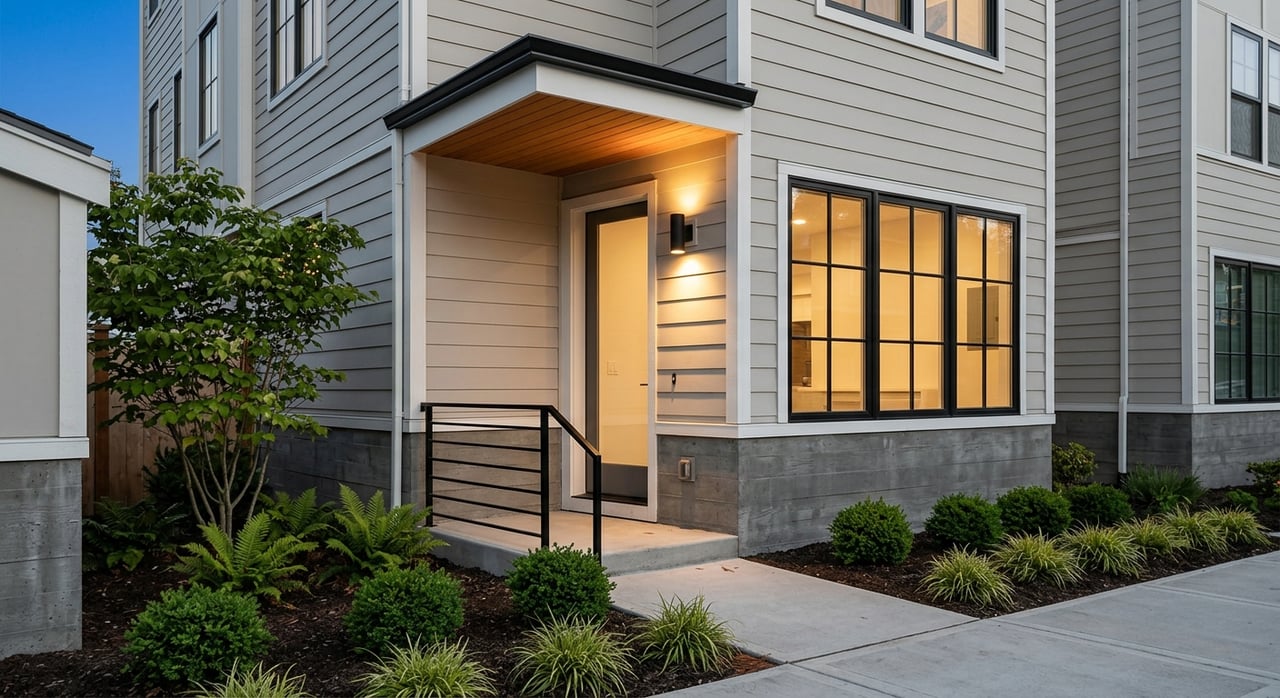
Housing is one of the most important parts of the City Center story. The city’s sub-area plan envisions a mixed-use urban neighborhood with condominiums, apartments, and townhouses alongside offices, retail shops, and services.
For buyers, that means the housing mix near the core is different from many purely residential parts of Snohomish County. You are more likely to find home options that support a lower-maintenance lifestyle, easier access to transit, and proximity to shopping and dining.
At the same time, the city’s plan calls for thoughtful transitions near surrounding residential areas. It notes lower or stepped-down building heights near the edges of the center and respect for adjacent single-family neighborhoods.
That gradual transition matters if you want access to the energy of City Center without feeling disconnected from nearby established residential areas. In practical terms, Lynnwood offers a blend of newer mixed-use growth near the core and older single-family neighborhoods around the edges.
One of the clearest examples of the area’s direction is Northline Village. The city identifies it as a mixed-use development near the station with 1,369 residential units plus office and retail space.
That scale shows how much the district is evolving. It also reflects the city’s broader push to encourage multi-family housing and mixed-use development in the City Center subarea through its Multi-Family Residential Property Tax Exemption program, which applies to apartments and condominium units.
If you are trying to gauge future inventory, neighborhood feel, or long-term convenience, projects like this are important to watch. They help show where Lynnwood is adding homes and how the area may function more like a connected urban center over time.
If you put the pieces together, Lynnwood City Center offers a lifestyle built around convenience and gradual change. You have a major retail anchor, a growing transit hub, nearby parks, and a housing pipeline that continues to add new options.
For some buyers, that means less time spent driving across town for basics. For others, it means access to condos, townhomes, or nearby single-family homes in an area where public investment and development activity are both moving forward.
This can be especially appealing if you want to weigh commute access, amenities, and long-term growth potential together. Rather than choosing between convenience and neighborhood feel, City Center gives you a mix of both, depending on where you focus your search.
Lynnwood City Center can appeal to several kinds of buyers. If you want shopping, dining, and transit close at hand, the core offers a practical setup for a busy routine.
If you are comparing housing styles, the area also gives you variety. Condos, apartments, and townhomes are central to the City Center vision, while single-family neighborhoods remain nearby around the edges.
If you are thinking as a long-term owner, it is also worth noting the steady public and private investment here. More housing, street and utility upgrades, transit infrastructure, and future park space all point to a district that is still in the process of becoming more complete.
If Lynnwood City Center is on your radar, it helps to narrow your search based on how you want to live day to day. A few questions can help guide that process:
When you look at the area through that lens, your search becomes more focused. Instead of just comparing square footage or price points, you can compare how each location fits your commute, errands, and future plans.
If you want help sorting through Lynnwood opportunities with a clear, data-driven approach, CJ Singh can help you evaluate homes, neighborhood positioning, and the tradeoffs that matter most for your goals.
Stay up to date on the latest real estate trends.

Get assistance in determining current property value, crafting a competitive offer, writing and negotiating a contract, and much more. Contact CJ today to discuss all your real estate needs!