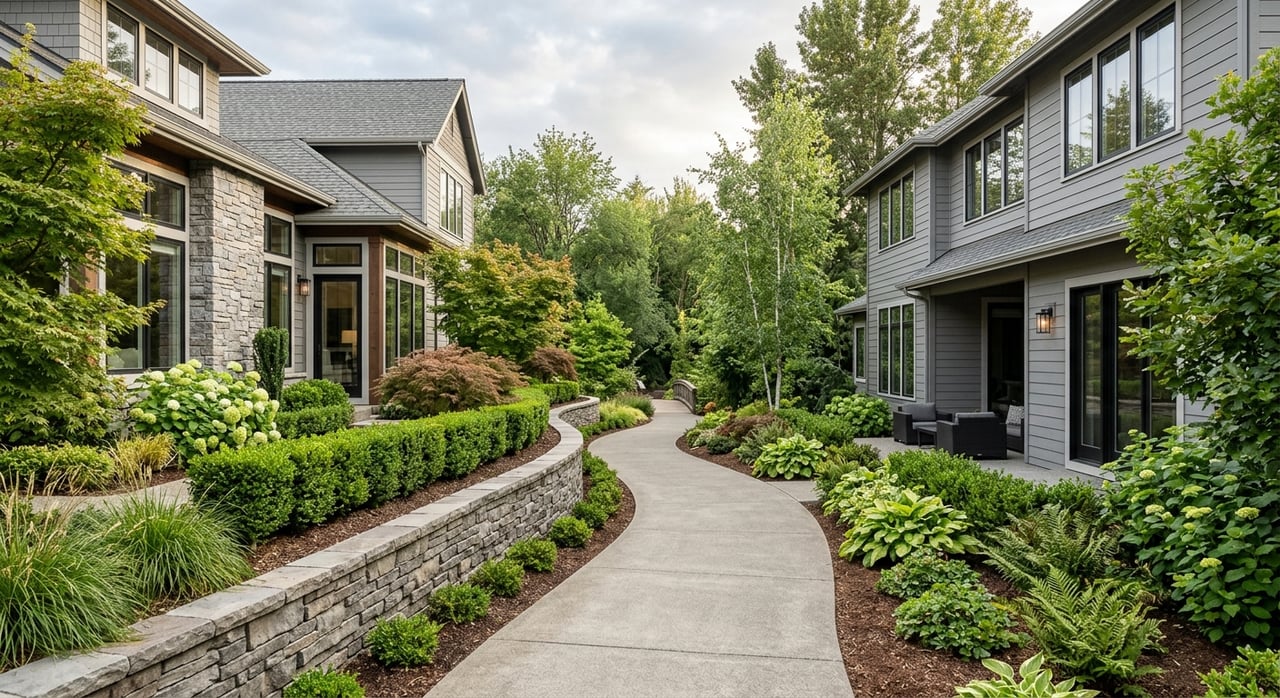
Understanding Mill Creek’s Master-Planned Communities And Value
July 9, 2026
July 9, 2026
Wondering why Mill Creek often feels different from other suburban markets nearby? It is not just about home prices or curb appeal. Mill Creek’s value is tied to how the city was planned, how many neighborhoods are organized, and how trails, parks, and Town Center are woven into daily life. If you are comparing Mill Creek with other Snohomish County options, this guide will help you understand what really shapes value here. Let’s dive in.
Mill Creek began as a planned residential development in the 1970s. According to the city’s historical materials, Tokyu and United Development Corporation developed 1,073 acres into 4,600 residences, along with a golf course, parks, and trails. The Mill Creek Community Association formed in 1974, and the city incorporated in 1983.
That origin still matters today. In many places, homes, retail, parks, and trails were added in phases without a strong overall framework. In Mill Creek, much of that framework was part of the original vision, which helps explain why the city has retained a planned suburban character.
When you buy in Mill Creek, you are often evaluating more than the house itself. You are also looking at how the neighborhood connects to open space, retail, walking routes, and shared amenities. That broader setup can shape how convenient and cohesive daily life feels.
This does not mean every home will perform the same way in the market. It does mean Mill Creek’s value story is often a systems story. Planning, maintenance, access, and neighborhood structure all play a role in how buyers experience the area and how owners think about resale.
One of the biggest mistakes buyers make is assuming every Mill Creek address has the same HOA setup. That is not the case. The Mill Creek Community Association, or MCCA, says it covers only a portion of the city, about 40% of the population.
MCCA includes 25 single-family neighborhoods, 15 condominium complexes, six townhouse complexes, and five apartment complexes. It also lists several city neighborhoods that are not MCCA residences, including Parkside, Highlands, Northpointe, The Parks, and The Reserve. So if you are comparing homes, the address alone does not tell you enough.
The exact plat, master association, and any sub-HOA can affect your costs and responsibilities. Dues, maintenance obligations, use rules, and resale expectations may differ from one community to another. That can make a real difference when you compare a detached home with a townhome or condo-style property.
MCCA says single-family homes pay the full annual assessment, townhouses pay 75% of that rate, and condos and apartments pay 50%. Many townhouse and condo communities may also have their own sub-HOA or property management assessments on top of that. For buyers, this is where monthly affordability and lifestyle trade-offs become very real.
According to MCCA, dues help fund common-area maintenance, pocket parks, trails, facilities, signage, staff, vehicles, amenities, social activities, and security patrol. In practical terms, the HOA fee is not just an added bill. It is part of the operating structure that helps maintain the community setting many buyers are looking for.
Washington law also gives homeowners’ associations authority to adopt budgets and reserves, collect assessments, regulate common areas, and levy reasonable fines, while requiring annual meetings, notice, and access to minutes. That means buyers should review HOA documents carefully, because the association has a direct role in how the community is run.
Mill Creek Town Center is a major part of the city’s appeal. Developed in 2002, it now includes more than 80 shops, restaurants, and services. The city describes it as a gathering place for residents and visitors, with a pedestrian-friendly layout that supports broader economic development goals.
For buyers, that matters because convenience can support long-term desirability. Being able to reach dining, errands, and everyday services within a well-planned district adds a layer of lifestyle value that goes beyond the four walls of a home.
The city’s Town Center design guidelines show that this was not accidental. Those guidelines encourage residential buildings to be convenient to parking, transit, open space, and pedestrian facilities. They also orient development toward the North Creek Greenway and public open spaces.
That kind of planning helps explain why Town Center feels integrated rather than isolated. It is designed to connect homes, public spaces, and commercial uses in a way that supports walking and gathering. For many buyers, that can make Mill Creek feel more complete than a suburb where amenities are more spread out.
Mill Creek’s trail and park network is another major piece of the puzzle. The city maintains 11 city parks totaling more than 28 acres and more than 23 miles of nature trails. MCCA also says its common property includes 21 pocket parks, 12 play areas, more than 16 miles of trails, and a nature preserve of more than 120 acres.
That is a meaningful amenity base for a suburban community. It gives residents access to open space and recreation as part of daily life, not just as an occasional destination. When buyers compare Mill Creek with nearby alternatives, this integrated network can stand out.
The city’s design guidelines call for trail links along the North Creek Greenway that connect Town Center to City Hall, the commercial area to the south, nearby residential neighborhoods, and eventually McCollum Park. In other words, the trails are not just scenic features. They are part of the city’s connective tissue.
That matters because connected amenities often feel more useful than isolated ones. A trail network that helps link neighborhoods, civic areas, and retail can improve how accessible the community feels from day to day.
Mill Creek’s planning story is not frozen in the past. The South Town Center Subarea project is intended to extend and enhance Town Center with new housing, shops, jobs, and public gathering spaces, while preserving and improving the North Creek Trail as a central feature.
According to the city, the goal is to create a more vibrant, walkable district and attract new investment through phased redevelopment. For buyers and owners, that signals continued public attention to the same ingredients that have long shaped Mill Creek’s identity: walkability, mixed uses, public space, and trail access.
Current pricing helps show where Mill Creek sits in the regional market. Zillow’s Home Value Index put Mill Creek at $991,943 on April 30, 2026, down 3.1% year over year. Nearby values were Bothell at $1,067,401, Mukilteo at $932,510, Lynnwood at $777,866, and Everett at $659,251.
The clearest takeaway is that Mill Creek sits in the upper-middle tier of northern Snohomish County pricing. It is below Bothell, around Mukilteo, and above Lynnwood and Everett. That can make it appealing to buyers who want a more organized suburban environment without reaching the higher pricing found in some nearby markets.
Market activity also matters. Redfin’s MLS-based market page reported that over the three months ending May 2026, Mill Creek’s median sale price was $854,489, homes sold in about 9 days, buyers averaged 2 offers, and 44 homes sold in May.
Because Zillow and Redfin use different methods and update schedules, it is best to read those figures directionally rather than as exact substitutes. Even so, they suggest an active market where well-positioned homes can still move quickly.
If you are shopping in Mill Creek, the smartest approach is to go beyond the listing photos. Two homes with similar square footage can come with very different HOA structures, trail access, neighborhood settings, and monthly carrying costs. Those differences can affect both your experience as an owner and your long-term resale picture.
A few practical questions can help:
Mill Creek’s appeal is not based on one feature alone. It comes from the way planning, community structure, parks, trails, and Town Center work together. That combination can support desirability because it creates an everyday living environment that feels intentional and connected.
Of course, not every home or neighborhood will deliver the same outcome. But if you are trying to understand why Mill Creek continues to attract attention, the answer is often bigger than the individual property. The built environment around the home is a key part of the value.
If you want help comparing Mill Creek communities, reviewing HOA differences, or weighing value against nearby suburbs, connect with CJ Singh for data-backed guidance and responsive local insight.
Stay up to date on the latest real estate trends.

Get assistance in determining current property value, crafting a competitive offer, writing and negotiating a contract, and much more. Contact CJ today to discuss all your real estate needs!